
Custom software development in Uganda: when it beats off-the-shelf
Custom software development in Uganda pays off when ready-made tools no longer fit how you work. How to decide, what it involves and how to start small.
Custom software development in Uganda makes sense when the way your organisation works is a real advantage, and ready-made tools keep forcing you to bend it. If you are running a school, SACCO, farm, clinic, distributor or public office on a mix of spreadsheets, WhatsApp groups and a package that only does half the job, a system built around your process can remove the double work and give managers numbers they trust.
That does not mean every organisation should build from scratch. Off-the-shelf software is often the right first step. This guide explains how to tell the difference, what a good custom project looks like, and how to start small. It is written by Victor Bee Technologies, a software company in Uganda that builds custom software, web and mobile apps, automation and systems integration.
Off-the-shelf or custom: the honest comparison
Off-the-shelf software is a ready-made product you subscribe to or buy: an accounting package, a point-of-sale app, a school or farm system. Custom software is built for one organisation's processes, data and users.
Off-the-shelf usually wins when:
- your process is standard, for example basic bookkeeping or payroll;
- a good local product already covers most of what you need;
- you need to start this month and cannot wait for a build;
- your budget is small and your team is still finding its way.
Custom software usually wins when:
- staff copy the same information between two or three tools every day;
- you have rules no package handles well, such as your own loan terms, pricing tiers, approval steps or reporting format for a funder;
- your users have special needs, such as low literacy, poor connectivity or local languages;
- you need to connect systems that were never designed to talk to each other;
- the software itself is part of your service to customers.
Many organisations end up with a mix: a ready-made product for the standard parts, and a small custom layer that connects everything and handles what makes them different. That middle route is often the most cost-effective.
Signs your organisation is ready for custom software development in Uganda
You do not need a big IT department to benefit. These signs show up in organisations of every size:
- The "one person knows" problem. A key report lives in one staff member's spreadsheet, and work stops when they travel.
- Month-end panic. Closing the books or preparing a board report takes days of collecting figures from different places.
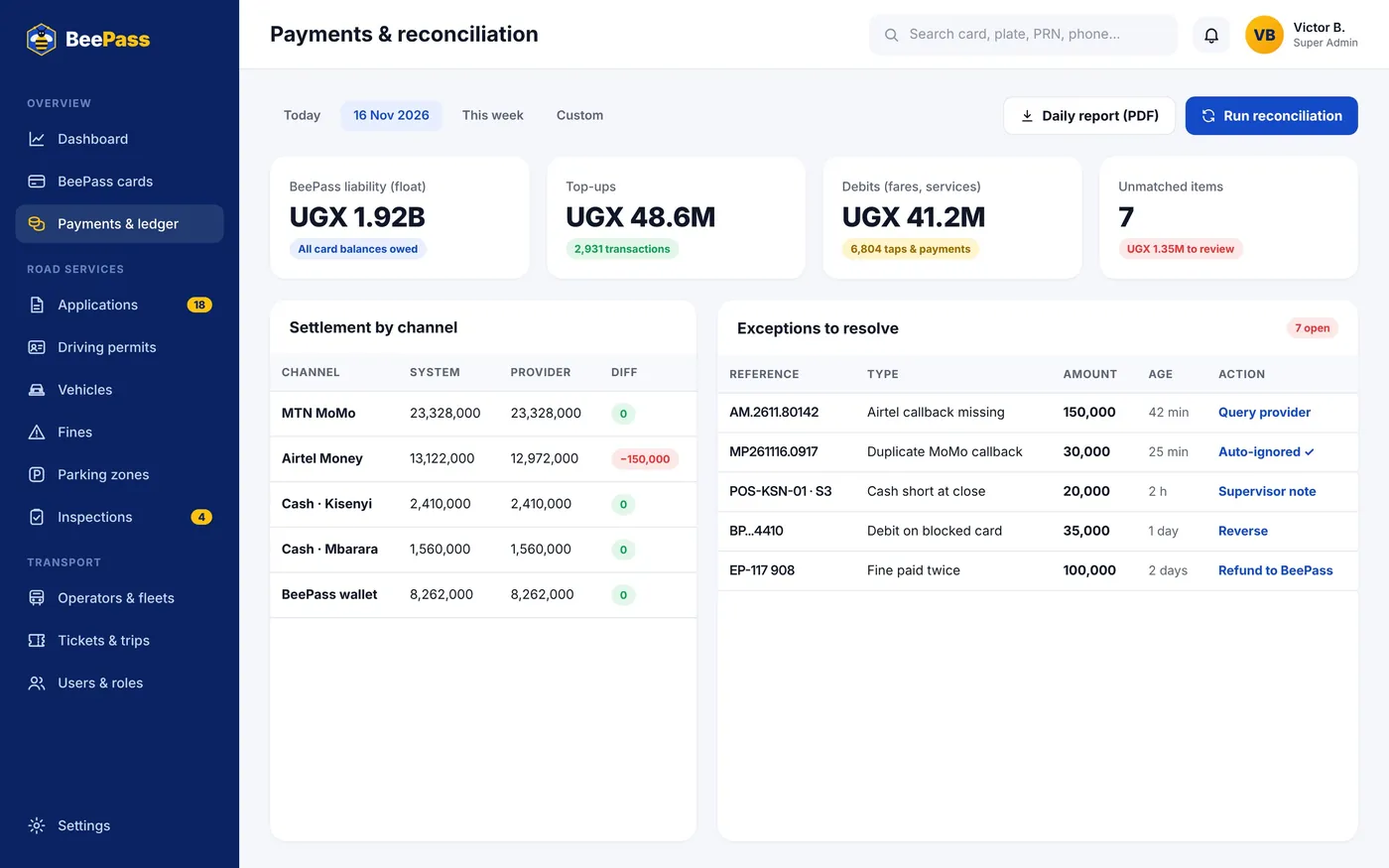
- Money you cannot trace quickly. Mobile money payments, cash and bank deposits are matched by hand, and disputes take hours.
- Field work on paper. Agents, teachers, farm workers or extension staff write things down and someone types them in later, if at all.
- Workarounds everywhere. Your team has learned to "trick" the current system to make it do what you need.
If two or more of these sound familiar, it is worth a conversation, even if the answer turns out to be a better off-the-shelf product or simple business automation rather than a new system.
What Ugandan conditions mean for the design
Software that works well in Kampala offices can fail in a district health centre or on a farm in Kiruhura. Good custom software development in Uganda plans for local realities from day one:
- Mobile money first. Most customers, parents and members pay with MTN MoMo or Airtel Money, so payments should be recorded automatically, not typed in. Our guide to mobile money API integration explains how.
- Offline working. Internet drops, especially upcountry. Apps for field staff should save work on the phone and sync when the signal returns.
- Simple screens for real users. Big buttons, pictures and plain English help staff who do not use computers every day.
- Roles and permissions. A worker, a cashier and a director should each see only what they need, with a record of who changed what.
- Personal data protection. Uganda's Data Protection and Privacy Act, 2019 applies to organisations that collect personal data, and the Personal Data Protection Office oversees compliance. Security, access control and backups belong in the design, not as an afterthought.
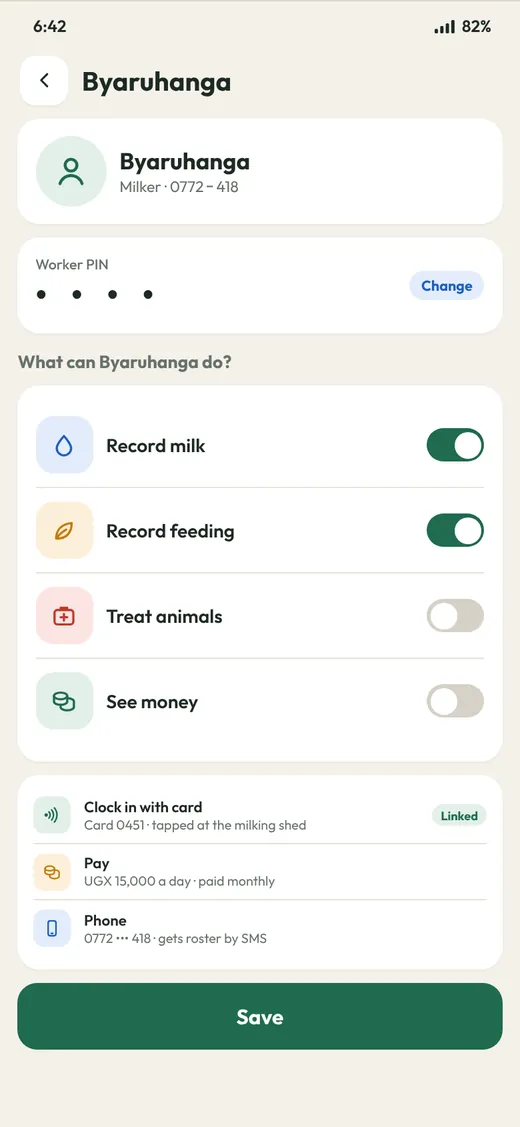
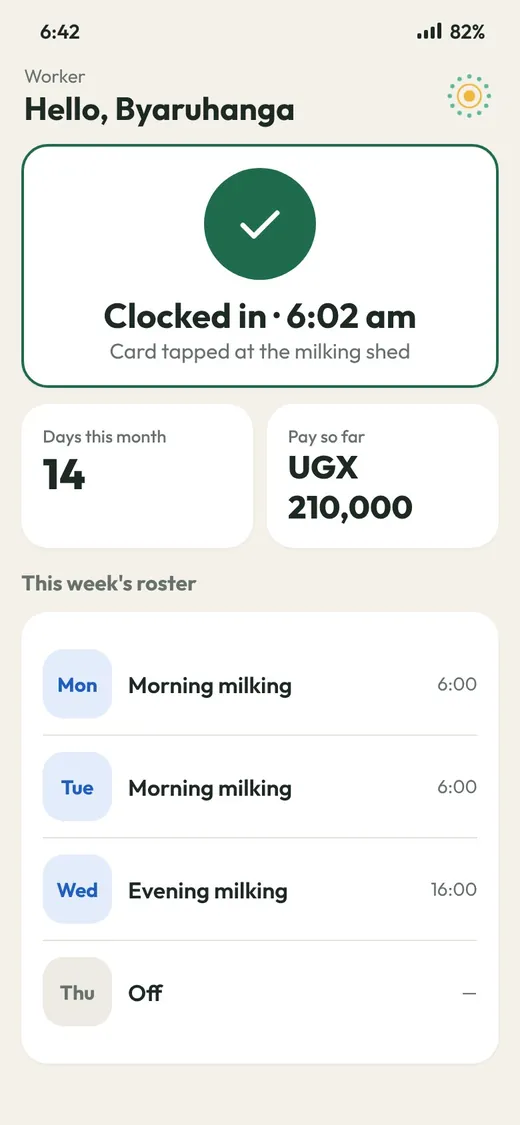
We built these ideas into our own products. FarmTap, our farm management app at farmtap.victorbee.com, works offline on the phone, uses big buttons and pictures, and lets a farm owner give each worker a PIN with only the permissions they need.
How a well-run custom software project works
A custom build should never be a leap of faith. The projects that go well tend to follow the same steps:
- Discovery. We sit with the people who do the work, map the current process and agree the problem worth solving first. This step often reveals quick wins that need no new software at all.
- A clear scope. A short written plan: who uses the system, what each screen does, which reports matter and what is left for later.
- Designs before code. Real screen designs that your staff can react to, so changes happen when they are cheap.
- Build in small releases. A first working version of the most important part, used by real staff, then improvements every few weeks.
- Training and handover. Short, practical training on the job, simple guides and a named support contact.
- Support and growth. Bugs fixed quickly, backups checked, and new features added as your organisation changes.
For a list of questions to put to any developer, including us, read 10 questions to ask before hiring a software developer in Uganda.
Start small: three good first projects
The safest way into custom software is a small project with a clear payoff:
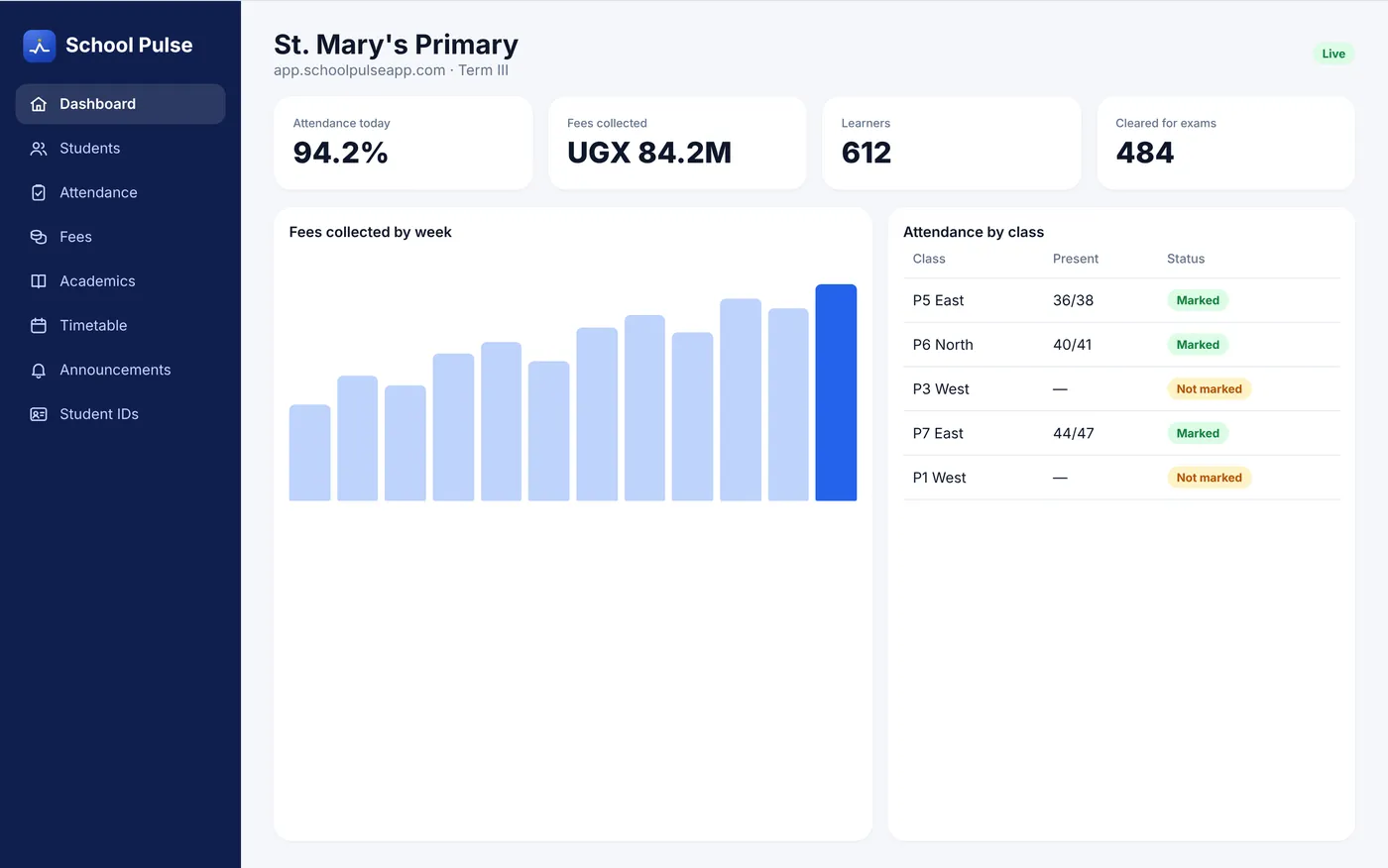
- A management dashboard that pulls figures from your existing tools into one live view for directors.
- An integration that connects two systems you already use, such as payments and accounting, so nobody retypes data. Our explainer on systems integration shows how this works.
- A field data app that replaces paper forms for staff who work away from the office, with offline saving and photos.
Each one can be useful on its own within a short time, and each becomes a foundation for the next step in your digital transformation.
Why work with Victor Bee Technologies
Victor Bee Technologies was founded in 2022 and is registered in Uganda, with a team of 15 building custom software, web and mobile apps, automation, systems integration and ICT consulting. We design for how Ugandan organisations actually work: mobile money, patchy internet, busy staff and the need for clear reports.
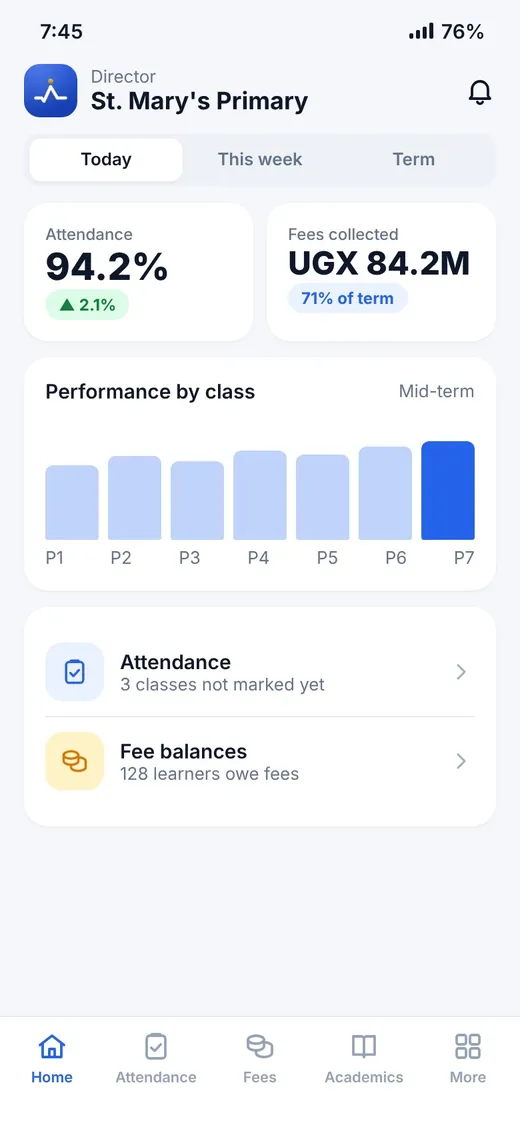
We also run our own products, including School Pulse for schools at schoolpulseapp.com, FarmTap for farms and Enphitic for design studios. Building and supporting products every day keeps us honest about what makes software usable after launch, not just on demo day. When you message us, you reach people who answer on WhatsApp and will tell you plainly if an off-the-shelf tool would serve you better.
Frequently asked questions
What is custom software development?
It is the design and building of software for one organisation's own processes, data and users, instead of buying a general product. It can be a full system, a mobile app, or a small tool that connects systems you already use.
Is custom software better than off-the-shelf software?
Not always. Off-the-shelf software is usually quicker and cheaper for standard tasks. Custom software is better when your process is different, when staff are retyping data between tools, or when the software is part of what you offer customers.
How much does custom software cost in Uganda?
It depends on the number of users, screens, integrations and how much support you need after launch. A good developer starts with a short discovery step and gives you a written scope and quote. Starting with one small, high-value part keeps the first cost low.
How long does it take to build custom software?
A small first release, such as a dashboard or a single integration, can take weeks, while a full system takes longer. Building in small releases means your staff start using something useful early instead of waiting for everything at once.
Who owns the software and the data?
Agree this in writing before work starts. Your data should always belong to your organisation, and the contract should say how you can export it, who hosts the system and what happens to the source code.
Talk to us about your idea
Not sure whether you need a custom system, an integration or a better ready-made tool? WhatsApp or call Victor Bee Technologies on 0793 128 137 or email info@victorbee.com. Tell us how your work runs today, and we will suggest the simplest next step.
Keep reading

Mobile money API integration in Uganda: a guide for organisations
Mobile money API integration in Uganda lets your system take MTN MoMo and Airtel Money payments automatically. How it works and how to plan it well.

Digitising a government office in Uganda: where to start
A practical roadmap for public offices moving paper files and manual approvals to digital systems, without losing control or accountability.

10 questions to ask before hiring a software developer in Uganda
Hiring a developer or software company? These ten questions protect your budget, your data and your project.